How to Fuel Your Trail Race – with 226ERS
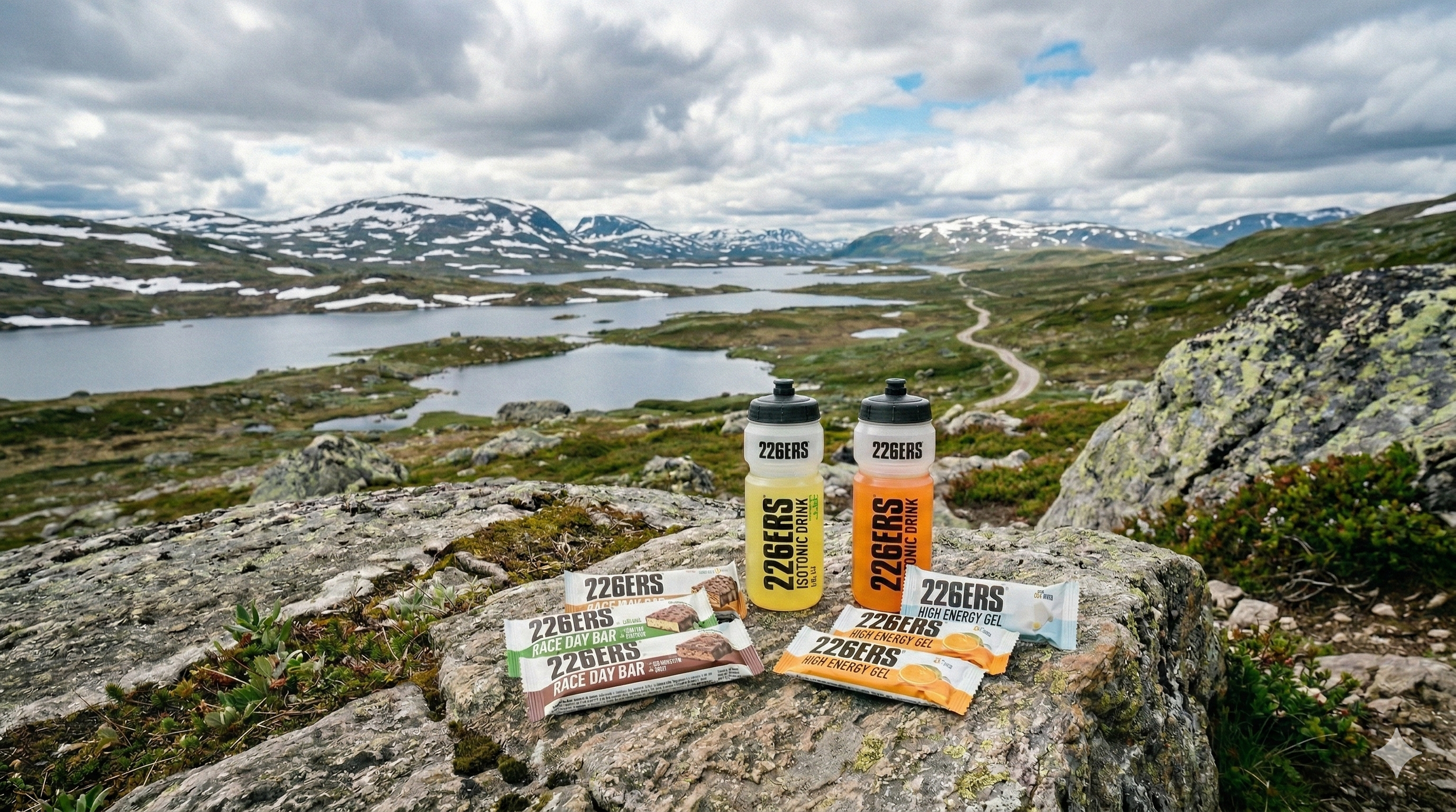
Fueling well is an important part of every trail race, whether you are running a short distance, taking on your first mountain race or preparing for a long day in the mountains.
In Norway Trail Series, runners meet steep climbs, technical trails, changing weather and different levels of intensity throughout the race. This makes energy and hydration an important part of the experience. A good fueling plan can help you stay focused, keep your energy more stable and enjoy the race from start to finish.
Together with 226ERS, one of our nutrition partners, we want to help runners prepare better for race day.
Start before race day
Good fueling does not start when the race begins. It starts in the days and hours before you stand on the start line.
Before race day, it is important to eat familiar food, drink enough and avoid testing anything completely new. The goal is to arrive at the start with energy in the body and a stomach that feels good.
Use your training runs to test what works for you. Some runners prefer gels, some use sports drink, while others combine bars, chews or more solid food. There is no single perfect solution for everyone, so the best plan is the one you have tested in advance.
Fuel little and often
During a trail race, it is easy to forget to eat and drink, especially when the terrain is technical or the climbs are demanding. But waiting until you feel empty is usually too late.
A simple strategy is to take in small amounts regularly. This can help you keep your energy more stable throughout the race and avoid big drops later on.
For many runners, this means using a combination of:
sports drink
energy gels
bars or chews
water
food from aid stations
The exact amount depends on the distance, intensity, weather, your body and how long you expect to be out on the course.
Adapt to the terrain
Trail running is not like road running. The pace changes all the time. You may run fast on open trails, hike steep climbs, move carefully through technical sections and then speed up again on easier terrain.
This means that your fueling plan should also be flexible. A steep climb can be a good time to sip sports drink or take a gel before the intensity gets too high. Easier sections can be a good moment to eat something more solid.
The most important thing is to avoid leaving all your fueling until you are already tired.
Think about hydration
Hydration is just as important as energy. In mountain races, the weather can change quickly. A cool morning can turn into a warm afternoon, and windy or wet conditions can make it harder to notice how much fluid you are losing.
Make sure you know what you want to carry yourself and what will be available at aid stations. For longer races, it can be useful to combine water with electrolytes or sports drink, especially if the race is warm or you expect to be out for several hours.
Test your plan in training
Race day is not the best time to try a new nutrition strategy. Use long runs, hill sessions or race-specific training to test what you want to use.
Try to answer these questions before the race:
What can I eat while running?
What works when I am tired?
How often should I drink?
What gives me energy without upsetting my stomach?
What should I carry from the start?
What can I use from the aid stations?
The more familiar your fueling plan feels, the easier it is to follow when the race gets tough.
Fueling is part of the race experience
Good fueling will not make the climbs disappear, and it will not make the race easy. But it can help you handle the challenge better.
Whether you are running in Sognefjord, Jotunheimen or Geilo, the goal is the same: start with energy, fuel regularly, stay hydrated and give yourself the best chance to enjoy the trails all the way to the finish line.
Prepare well. Fuel smart. Enjoy the race.
